
Frequency Trumps Intensity

“The human body is adapted for frequent, moderate physical activity—not for chronic high intensity or complete inactivity.” -Daniel Lieberman
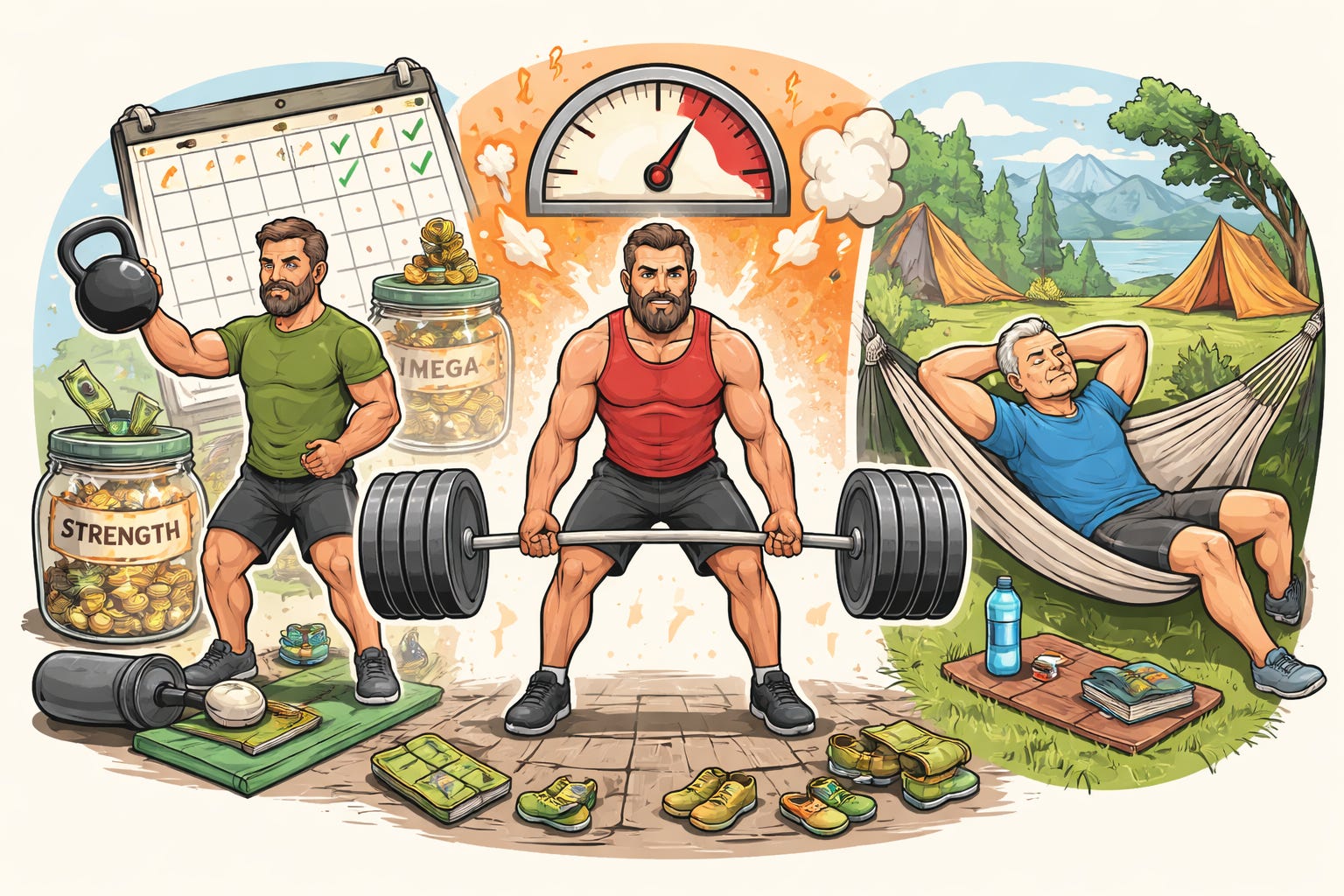
Ever since social media influencers became a thing, strength training quietly turned into a constant test. The highlight reel for the Gram’ bro.
Every session became an opportunity to prove something instead of building long term strength.
And for a while, that approach works. Especially when you’re younger, recovery is fast, and your joints haven’t started sending you little warning signals yet. You can push hard, chase numbers, flirt with your limits on a regular basis, and get away with it. Until you can’t.
The truth is, if you want to be strong for the long haul you have to shift how you think about training. You have to stop treating every session like a test and start treating it like practice. That’s where the idea that frequency trumps intensity comes in.
The body responds incredibly well to regular exposure. Not heroic efforts and all-out ball busting maxes, but consistent, repeatable work. Showing up and moving weight, over and over again, with enough restraint that you could come back and do it again tomorrow if you had to.
This kind of training doesn’t feel dramatic. It doesn’t leave you wrecked on the floor of the ER. Most of the time, it feels almost too manageable. You finish a session knowing you did something, but also knowing you had more if you needed it. That’s exactly the point. Leave some weight on the platform so there is something to come back to.
You’re building capacity. You’re giving your joints and connective tissue a steady diet of load so they adapt instead of getting inflamed. You’re refining technique and accumulating volume without digging a recovery hole that takes days to climb out of. Over time, that adds up in a way that sporadic, high-intensity efforts never can.
That doesn’t mean intensity has no place. It just means it has to be used strategically.
You should strain occasionally. You should feel heavy weight in your hands or on your back. You should remind yourself what it’s like to push. But those moments should feel like a step up from your normal training, not the baseline.
Most people get that backwards. They live in that high-intensity space, constantly withdrawing from their reserves, and then wonder why progress stalls or worse, the injuries pile up.
A better way to think about it is something my friend Mike Mahler has said for years about his deadlift training. Submaximal work is like making deposits into a bank account. Max effort lifts are withdrawals. If all you ever do is withdraw, eventually the account runs dry.
Your body works the same way. Every hard session takes something out of you; your nervous system, your joints, and your connective tissue. And if you’re not consistently putting something back in through manageable, repeatable training, you’re operating on borrowed time.
This becomes even more important when you join the grey beard club.
In your 20s, you can get away with a lot. In your 30s, you start to notice patterns. By your 40s and 50s, the bill comes due if you’ve been reckless, and it’s not something you should look forward to paying.
But the upside is this: if you train with a little more patience and awareness, you can keep getting stronger. Not in spite of your age, but because you’ve learned how to work with your body instead of constantly trying to overpower it. And that’s where recovery comes into the picture.
The adaptations you’re chasing don’t happen during the set. They don’t even happen during the session. They happen afterward, when your body has the nutrition and rest to actually rebuild.
If you’re constantly pushing intensity and creating fatigue, you’re short-circuiting that process. You’re doing the work, but you’re not getting the return.
“You don’t get stronger in the workout. You get stronger recovering from the workout.” -Charlie Francis
On the other hand, when your training is built around frequency while avoiding failure, you give yourself a chance to recover properly. This requires a different mindset. You have to be okay not chasing a PR every week. You have to let go of the need to feel destroyed after every session. You have to trust that what feels “easy” in the moment is actually building the kind of strength that you can rely on long-term.
It’s a slower approach, but it’s also a more durable one. You’re slow cooking strength, not microwaving it. What you end up with isn’t just bigger numbers; it’s a body that can handle training, recover from it, and keep showing up without constantly breaking down.
That’s the real goal with all this longevity stuff. It’s not about being the strongest you’ve ever been for a brief window of time, but to still be strong, capable, and independent decades from now. Strength that comes and goes isn’t all that useful. Strength that sticks around is.
If this approach resonates with you—training hard, but not recklessly… building strength without constantly feeling beat up—that’s exactly what we focus on inside my Strength & Health Online Coaching Club.
I hope you enjoyed this week’s article, and until next time, stay strong and healthy!
I think if you train long enough, WE all come tobthe Same conclusion. A big problem in my opinion are the mixing and matching of different Goals and the big role scintific influencers play in the education of younger lifters. Like you said, nowadays everything has to be a PR, to absolut failure and so on. More than two Sets are redundant. More than two exercises per muscle are redundant and so on...this thinking brings injuries and pain
That's been the hardest part for me to learn: that a ho-um, submax session still has a training effect. I've had to be reminded, by injury, that I'm TRAINING, not testing.